

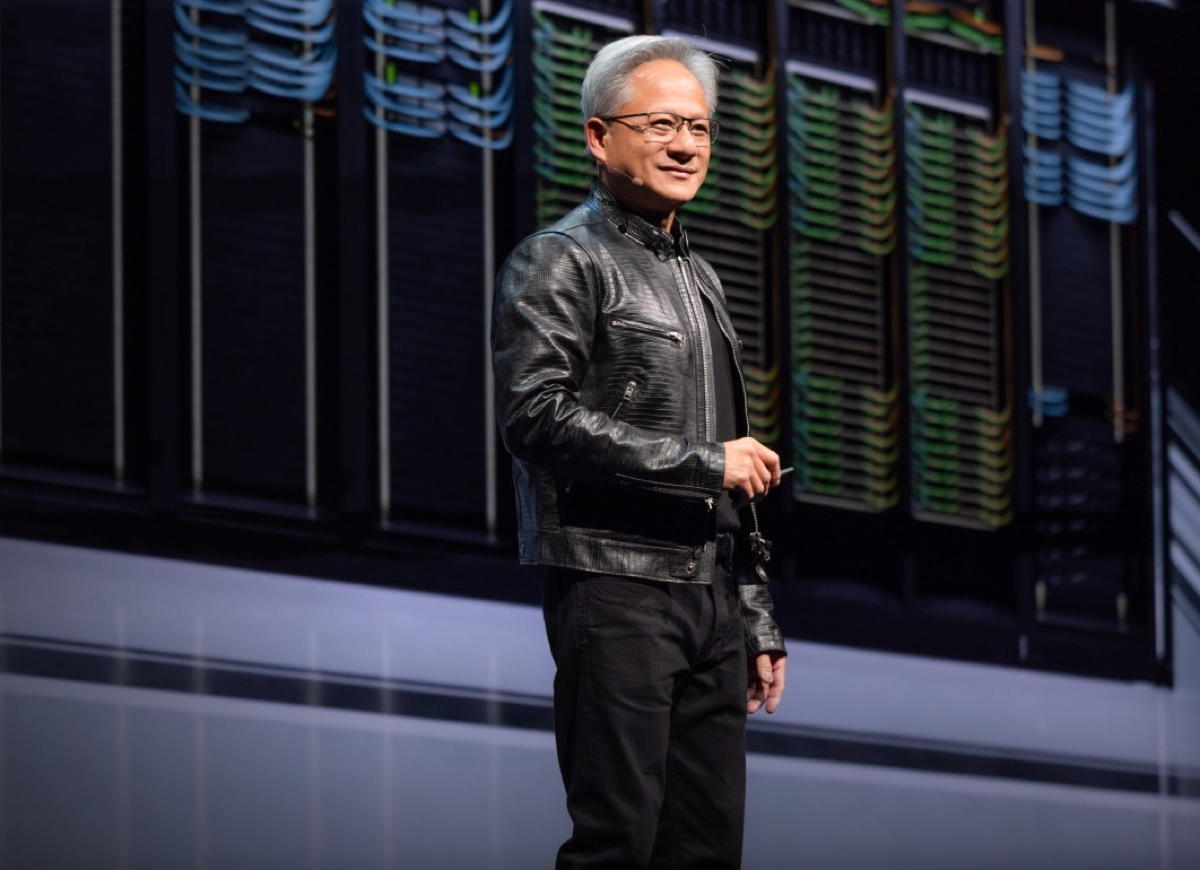
Nvidia chief executive Jensen Huang said the company will “probably” not invest $100 billion (£75bn) in OpenAI, following a much smaller $30bn investment as part of a funding round last week, giving the reason as the AI start-up’s likely IPO sometime this year.
“I think the opportunity to invest $100 billion in OpenAI is probably not in the cards,” Huang said during a Morgan Stanley conference. The comment highlights a significant shift in the dynamic between Nvidia and OpenAI, two companies that have been at the forefront of the generative AI revolution. Huang added, “Because of the expected IPO, this might be the last time we’ll have the opportunity to invest in a consequential company like this.”
Nvidia’s relationship with OpenAI has been a subject of intense speculation for months. OpenAI, the creator of ChatGPT, relies heavily on Nvidia’s graphics processing units (GPUs) to train and run its large language models. This dependence has made Nvidia an indispensable partner, and any investment by Nvidia is seen as a strategic move to secure its position in the AI ecosystem.
In September, Nvidia said it would invest up to $100bn into Nvidia over a period of several years, with the rounds of investment tied to the start-up’s successive deployments of Nvidia’s chips in data centres, but the companies provided few details. The announcement spurred further similar announcements and drove up stock prices, but the agreement was never finalised, and in January had reportedly stalled. The lack of a finalised deal reflects the complexities of negotiating such a massive investment, especially as the AI industry undergoes rapid changes.
Huang also addressed Nvidia’s $10bn investment in Anthropic, another major AI company. He said that investment was probably “the last” in that company due to Anthropic’s expected IPO. Anthropic, founded by former OpenAI employees, has emerged as a strong competitor with its Claude model. The company has also attracted significant funding from other tech giants, including Google and Salesforce.
The comments come at a time when the economics of the AI boom are changing. Last year’s optimistic announcements have given way to the realities of building massive data centres for powering the technology. Such facilities consume huge amounts of power, water and other natural resources, and potentially drive up prices for local residents, something that has been drawing an increasing backlash. The environmental impact of AI has become a growing concern among policymakers and the public. For example, training a single large language model can emit as much carbon as five cars over their lifetimes.
Nvidia has been the primary beneficiary of the AI boom. The company’s market capitalization surpassed $2 trillion earlier this year, driven by insatiable demand for its GPUs. However, the company also faces challenges, including supply chain constraints and increasing competition from custom chips designed by companies like OpenAI and Google. OpenAI has reportedly been developing its own AI accelerator to reduce its reliance on Nvidia, which could reshape the competitive landscape.
OpenAI’s anticipated IPO has been the subject of much speculation. The company is reportedly in talks with investment banks to go public, with a valuation that could exceed $100 billion. An IPO would allow OpenAI to raise capital from public markets, reducing its need for large private investments from companies like Nvidia. It would also expose the company to greater regulatory scrutiny and public reporting requirements.
The AI landscape is increasingly crowded with startups and incumbents vying for dominance. Microsoft, a major investor in OpenAI, has integrated GPT models into its products, while Google has launched its own Gemini model. Meta has released its Llama models as open-source, and a wave of other startups are developing specialized AI models for healthcare, finance, and other industries. Nvidia’s GPUs remain the backbone of this ecosystem, but the company’s strategy of investing in key players may be shifting.
Huang’s statements also reflect a broader trend in the tech industry: the transition from private investment to public listings. Many AI startups have reached valuations that make staying private less attractive, and investors are eager for liquidity. The IPO market for tech companies has shown signs of recovery after a slump in 2022 and 2023, with companies like Reddit and Arm making successful public debuts.
The relationship between Nvidia and OpenAI has been symbiotic but also fraught with potential conflicts. OpenAI’s need for Nvidia’s chips has given Nvidia enormous leverage, but OpenAI’s ambitions to develop its own hardware could challenge that reliance. Meanwhile, Nvidia has also invested in other AI companies, such as Cohere and Stability AI, diversifying its portfolio beyond OpenAI.
In the broader context, the AI industry is at a pivotal moment. The technology has advanced rapidly, but so have concerns about safety, regulation, and societal impact. OpenAI itself has faced internal turmoil, including the brief ousting and reinstatement of CEO Sam Altman in late 2023. The company has also been sued by authors and media organizations over copyright issues related to its training data.
Nvidia’s decision not to pursue a $100bn investment in OpenAI may be a prudent one, given the uncertainties. The company can still maintain its strategic partnership through chip sales and smaller equity stakes. For OpenAI, an IPO would provide a new source of capital and a path to independence from any single investor.
As the AI boom continues to evolve, the decisions made by companies like Nvidia and OpenAI will shape the future of the technology. Huang’s candid remarks offer a glimpse into the strategic thinking behind these decisions. While a $100bn investment may have been a possibility at one point, the realities of the market and the companies’ own trajectories have made it unlikely. The focus now shifts to how both companies will adapt to the changing landscape, including the challenges of scaling AI infrastructure and navigating regulatory environments.
The data centre buildout required for next-generation AI models is staggering. Microsoft, Google, Amazon, and Meta are spending tens of billions of dollars each year on capital expenditures, much of it for data centres and Nvidia chips. This demand has strained global supply chains and prompted Nvidia to accelerate its product roadmaps. The company’s upcoming Blackwell architecture promises even greater performance for AI workloads, but it also requires massive power and cooling.
Meanwhile, the rise of open-source AI models poses a challenge to proprietary models like OpenAI’s GPT. While OpenAI has maintained a lead in terms of model quality, open-source alternatives are closing the gap and gaining popularity among developers and enterprises. This dynamic could affect OpenAI’s ability to generate revenue through API access and subscriptions, which might influence its IPO valuation.
In summary, Jensen Huang’s statement about the $100bn investment is more than a simple denial; it reflects the complex interplay of market forces, corporate strategies, and technological change that defines the AI industry today. The story is far from over, and the next chapters will likely involve IPOs, new hardware, and continued debate about the role of AI in society.
Source: Silicon UK News