

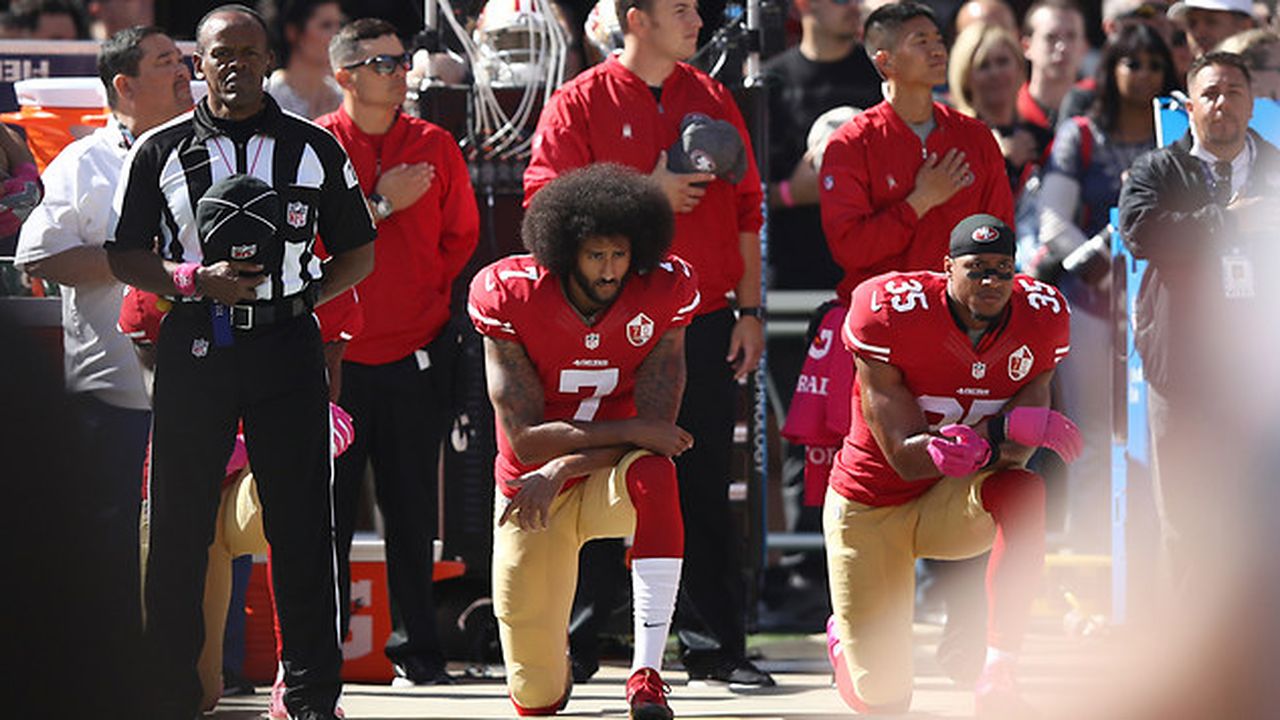
Nike has once again thrust itself into the center of American cultural discourse by announcing a partnership with Colin Kaepernick, one of the most polarizing figures in professional sports. The former San Francisco 49ers quarterback, who has been without an NFL contract for nearly two years, will be one of the faces of Nike's campaign celebrating the 30th anniversary of its iconic 'Just Do It' slogan.
Kaepernick posted a black-and-white photo of himself on Twitter with the caption, 'Believe in something. Even if it means sacrificing everything.' The tweet was quickly retweeted by Nike's official account, igniting a firestorm of reactions across social media. Some praised the brand for taking a stand on social justice, while others vowed to boycott the company.
Background of the Controversy
Colin Kaepernick first made headlines in the fall of 2016 when he decided to sit, and later take a knee, during the playing of the national anthem before NFL games. He explained that his gesture was a protest against police brutality and racial inequality in the United States. The action resonated with other players, and soon more than 150 NFL athletes were kneeling alongside him, creating a league-wide movement that drew both support and fierce criticism.
His protest quickly became a political flashpoint. Then-presidential candidate Donald Trump repeatedly called for Kaepernick to be fired or removed from the league, and he urged the NFL to make it mandatory for players to stand during the anthem. In response to the mounting controversy, the NFL adopted a new policy in May 2018 that required players to either stand for the anthem or remain in the locker room. However, after backlash from players and the public, the league suspended the policy.
Since the protests began, Kaepernick has not been signed by any NFL team. Many believe that he has been blacklisted for his activism, though the league denies this. In 2017, Kaepernick filed a grievance against the NFL, alleging that team owners colluded to keep him out of the league. The case remains unresolved as of late 2018.
Nike's Bold Marketing Move
Nike's decision to feature Kaepernick in its 'Just Do It' campaign is seen as a calculated risk. The company has a long history of associating with controversial athletes, including Michael Jordan, whose fiery competitiveness and political stances sometimes drew criticism. More recently, Nike has supported Serena Williams after her high-profile disputes with tennis officials over dress codes and behavior.
The campaign also features other iconic athletes, such as tennis legend Serena Williams, basketball superstar LeBron James, NFL players Odell Beckham Jr. and Shaquem Griffin, and skateboarder Lacey Baker. By including Kaepernick, Nike is aligning itself with the message of perseverance in the face of adversity, which is the essence of 'Just Do It.'
Gino Fisanotti, Nike's vice president for North America, said in an interview with ESPN, 'We believe Colin is one of the most inspiring athletes of his generation, who has used the power of sport to help move the world forward.'
The partnership extends beyond the advertising campaign. Nike has committed to designing a signature shoe named after Kaepernick and will contribute financial support to his foundation, which focuses on 'Know Your Rights,' a social justice initiative.
Public Reaction and Boycott Calls
Almost immediately after the announcement, social media erupted. Many users posted videos of themselves burning Nike sneakers or cutting off the iconic swoosh logo from their clothing. The hashtags BoycottNike and NikeBoycott trended on Twitter, powered largely by conservative voices and supporters of President Trump. Some political commentators, such as Fox News hosts, harshly criticized the company for embracing what they described as an 'anti-American' figure.
However, Nike also received an outpouring of support. Many users praised the brand for taking a principled stand on issues of social justice. Some analysts noted that the controversy could actually strengthen Nike's connection with its core demographic—young, urban, and diverse consumers. The company's stock price initially dipped by about 2% but later recovered, indicating that investors saw the move as a long-term brand investment rather than a liability.
The backlash also sparked conversations about free speech, corporate responsibility, and the role of companies in political and social debates. Some pointed out that Nike's move was not entirely altruistic; by aligning with a cause that resonates with its target audience, the company hoped to boost sales and reinforce brand loyalty in an increasingly competitive athletic wear market.
Internal Scandals and Brand Image
Interestingly, the Kaepernick campaign comes at a time when Nike itself has been grappling with major internal controversies. Over the past year, the company faced a series of scandals involving accusations of sexual harassment, gender discrimination, and a toxic workplace culture. Several high-level executives were forced to leave, and the company launched a public effort to reform its human resources policies.
By associating with Kaepernick, Nike may be attempting to reshape its public image as a forward-thinking, socially conscious company. However, critics note that the brand's commitment to social justice is called into question when its own internal practices have been criticized for mistreating women and minorities. Whether the campaign will succeed in rehabilitating Nike's image or simply draw more attention to its internal problems remains to be seen.
Historic Context of Athlete Activism
Kaepernick's protest is part of a long tradition of athletes using their platforms to address social issues. From Muhammad Ali's refusal to be drafted during the Vietnam War to Tommie Smith and John Carlos raising their fists at the 1968 Olympics, sports figures have often been at the forefront of political activism. In recent years, the Black Lives Matter movement has inspired many athletes to speak out against racial injustice.
Nike's support of Kaepernick is reminiscent of its support of Michael Jordan, who famously avoided political endorsements during his career but later became more outspoken. However, Jordan once said, 'Republicans buy sneakers too,' reflecting the tension between corporate interests and social stance. Nike's current move suggests a shift away from that cautious approach.
The partnership also highlights the growing trend of brands taking sides in polarized debates. In the era of Trump, companies are increasingly pressured to define their values publicly. While some may face backlash from consumers who disagree, others gain loyalty from those who feel underrepresented or unheard.
Looking Forward
As the new NFL season approaches, Kaepernick remains without a job on the field, but his influence off the field continues to grow. His partnership with Nike ensures that his message will reach a global audience, potentially inspiring other athletes to use their platforms for change. The full effect of the campaign on Nike's sales and reputation will become clear in the coming months, but it has already succeeded in dominating news cycles and social media feeds.
The decision to feature Kaepernick is a gamble—one that could alienate some customers and energize others. But Nike clearly believes that the power of 'Just Do It' lies in its ability to inspire people to overcome obstacles, and Kaepernick's story embodies that spirit perfectly. Whether one agrees with his protest or not, his sacrifice of a professional football career for a cause he believes in aligns with the core message of the brand.
In the end, Nike has positioned itself not just as a seller of sneakers and apparel, but as a participant in the ongoing national conversation about race, justice, and the role of athletes in society. The coming weeks will reveal how well that strategy resonates with consumers and whether the controversy fades or deepens.
Source: Les Echos News